
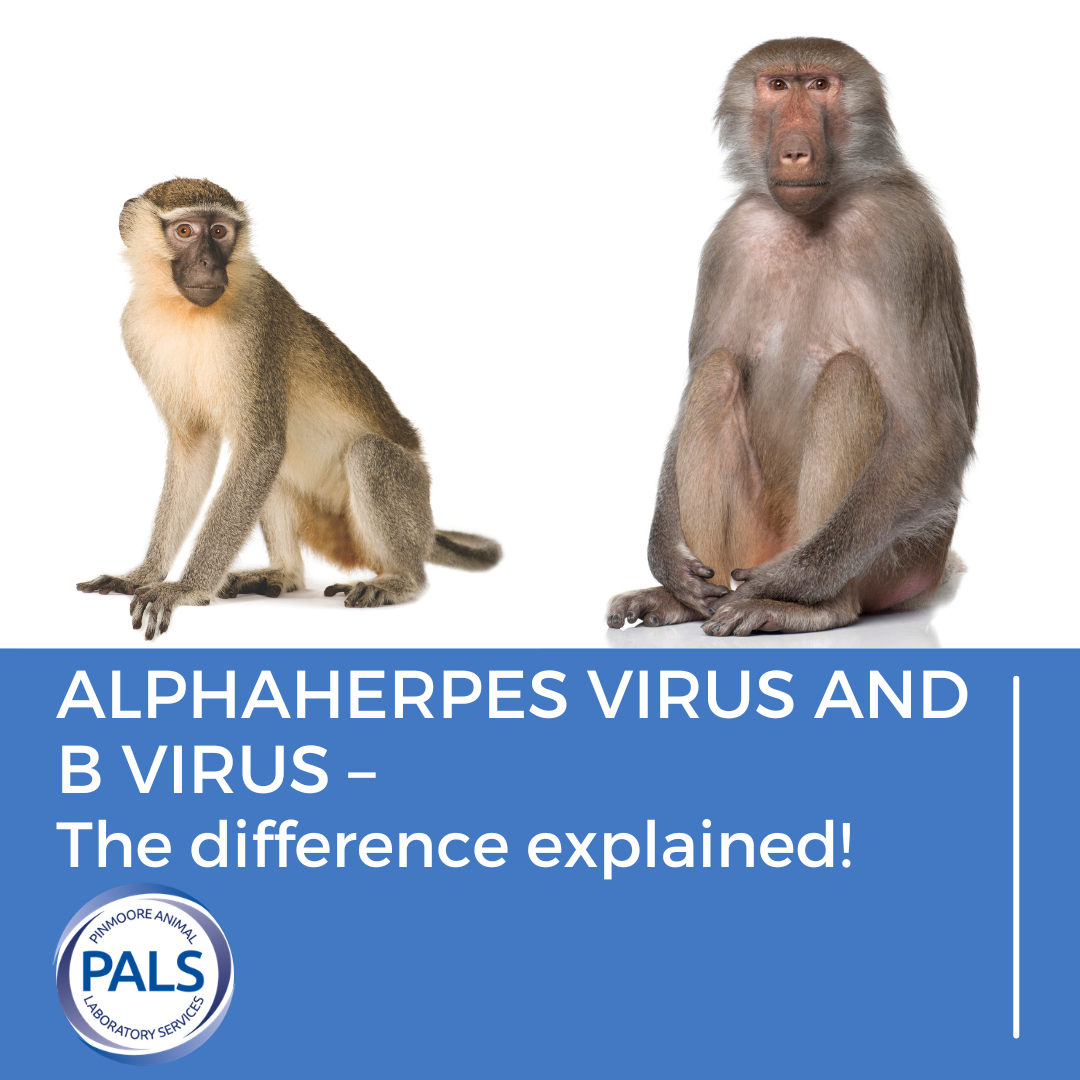
Macaques are a genus of Old-World Monkey that serve as a natural host for up to 35 identified non-human primate Alpha herpes viruses, which may also be referred to under the family name of Cercopithecine herpesvirus, or Simian herpesviruses.
Of this group of viruses, only one is known to be highly pathogenic in humans – B virus (or alphaherpes B virus), which is also known as Herpesvirus simiae, Cercopithicine herpesvirus 1 (CeHV-1) and Macacine alphaherpesvirus 1. Despite the varying nomenclature, these are all the same neurotropic alphaherpes virus that is endemic amongst macaques. It is thought that over 75% of adult macaques are infected with this virus, which causes fairly benign cold-sore type lesions in the natural hosts. However, if humans become infected, via scratches, bites or exposure to mucosal fluids, they can suffer severe disease, with 70-80% mortality if left untreated. In humans, this pathogen is highly neurovirulent, with clinical signs including localised pain, numbness and itching, followed by severe neurological symptoms due to the encephalitis/encephalomyelitis caused by this virus in humans.
At PALS, we test for the specific B virus that is lethal to humans, rather than blanket testing for alpha herpesviruses, in order to know exactly what the macaques in your care might be carrying. This will help to keep the carers of these animals safe, with the knowledge to access the correct treatment should an inadvertent event occur.